Diagnosing Your Symptoms: What Tooth Sensitivity After Filling Tells Us
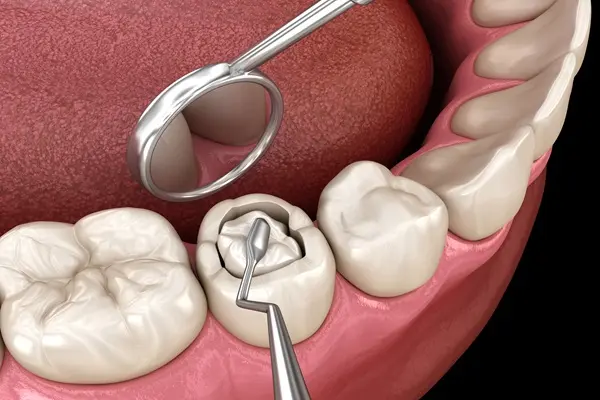
At SmileNote, when a patient returns a few days after treatment complaining of discomfort, our role is not to speculate—it is to diagnose. Dental pain is not random. It follows patterns. The timing, intensity, trigger, and duration of pain form a clinical language that allows us to identify what is happening beneath a restoration.
We do not treat “pain” as a symptom in isolation. We treat the underlying mechanical or biological cause. In daily practice, tooth sensitivity after filling presents in distinct, repeatable clinical scenarios. Recognizing these patterns is essential to determining whether a restoration is healing normally or requires intervention.
Scenario 1: Sharp Pain When Biting Down (Occlusal Trauma)
This is one of the most frequent post-treatment complaints. The tooth feels comfortable at rest and does not react to temperature. However, when chewing—even on soft food—a sudden, sharp “zing” occurs.
Clinical Interpretation
This presentation almost always indicates that the restoration is slightly high. While anesthetized, patients cannot accurately feel their bite. If a filling contacts prematurely—even by a fraction of a millimeter—it concentrates force on that tooth. This excessive pressure irritates the periodontal ligament, the shock-absorbing structure anchoring the tooth to the bone. The solution is straightforward: adjust and polish the high point. Relief is typically immediate once the bite is properly balanced.
Scenario 2: Pain on Release of Pressure (Adhesive Seal Compromise)
In this case, biting down feels normal. The pain occurs when the jaw opens and pressure is released.
Clinical Interpretation
This pattern strongly suggests a failure in the adhesive seal between the tooth and the restoration. When a microscopic gap exists, biting compresses it. Releasing the bite creates negative pressure, pulling fluid through dentinal tubules and stimulating the nerve—a phenomenon associated with post-restorative sensitivity. Unfortunately, this issue cannot be resolved through adjustment alone. The filling usually needs to be replaced to re-establish a proper marginal seal and eliminate fluid movement.
.webp)
Scenario 3: Brief Cold Sensitivity That Resolves Quickly (Reversible Pulpitis)
A sip of cold water triggers discomfort, but the pain fades within a few seconds after the stimulus is removed.
Clinical Interpretation
This is a classic sign of reversible pulpitis. The dental pulp has been irritated—often by drilling, dehydration, or acid etching—but remains healthy and capable of recovery. This type of post-filling sensitivity is common and typically self-limiting. In the absence of worsening symptoms, the recommended approach is observation. As the pulp heals and tertiary dentin forms, sensitivity gradually diminishes.
Scenario 4: Spontaneous or Throbbing Pain (Irreversible Pulpitis)
This is the most concerning pattern. Pain occurs without stimulation, may throb, linger long after cold exposure, or wake the patient at night.
Clinical Interpretation
These symptoms indicate irreversible pulpitis. The pulp has suffered extensive inflammation—often due to deep decay or bacterial insult—and is no longer capable of healing. In this scenario, adjusting or replacing the filling will not resolve the problem. Root canal therapy is typically required to remove the inflamed tissue and eliminate pain.
Final Thoughts: Why Pain Patterns Matter
Not all discomfort after a filling is the same. The difference between pressure-related pain, temperature sensitivity, release pain, or spontaneous aching allows clinicians to pinpoint the exact cause of tooth sensitivity after filling.
Understanding these distinctions helps both patients and clinicians respond appropriately—whether that means a simple bite adjustment, monitoring normal healing, or initiating further treatment. Accurate diagnosis is the foundation of predictable, evidence-based dental care. At SmileNote, we believe informed patients experience better outcomes—and less unnecessary worry—by understanding what their symptoms truly mean.