Should You Worry About Pain After Teeth Whitening?
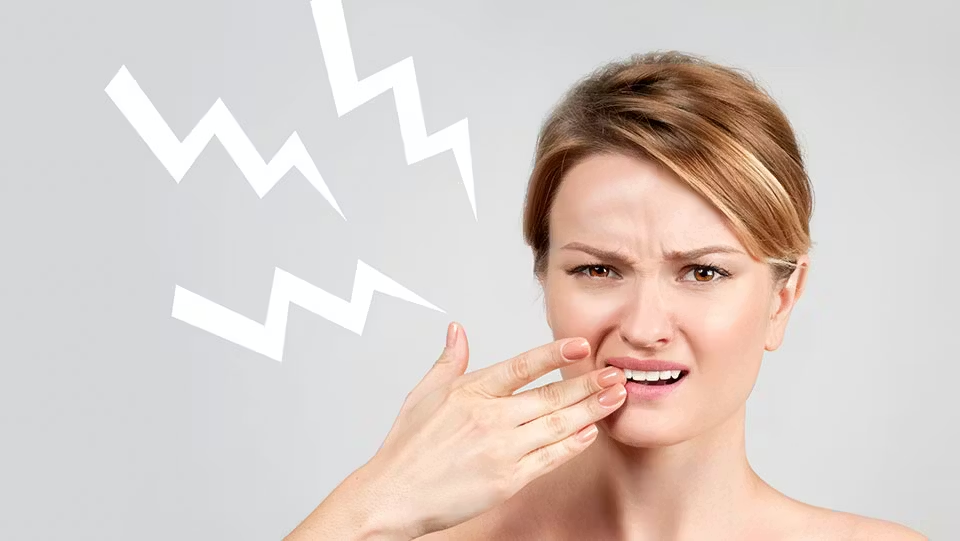
If you have ever tried a whitening treatment and later noticed a sudden twinge when drinking something cold, you are not alone. Many patients mention pain after teeth whitening, especially within the first day after their treatment. On dental discussion blogs such as SmileNote, readers frequently share similar experiences and wonder whether the discomfort is normal.
As dentists, we hear this concern regularly during follow-up appointments. The good news is that mild sensitivity after whitening is common and usually temporary. However, understanding why it happens can help patients feel more comfortable and confident about the process. When we discuss pain after teeth whitening, the goal is not only to address the sensation itself but also to help patients understand how whitening works and why different people respond differently.
What Happens During a Teeth Whitening Procedure?
Before discussing sensitivity, it helps to understand what whitening treatments actually do. Professional whitening products typically contain hydrogen peroxide or carbamide peroxide. These ingredients penetrate the outer enamel layer and interact with stain molecules that have accumulated over time. The whitening agent breaks down these molecules into smaller fragments that reflect less color, making the tooth appear brighter.
This chemical reaction is what produces the whitening effect. However, because the whitening gel must travel through microscopic pathways in enamel, it may occasionally stimulate the internal structures of the tooth. When that stimulation occurs, patients sometimes feel what they describe as pain after teeth whitening, although the sensation is usually brief and mild.
Why Teeth Sometimes Feel Sensitive After Whitening
The Hydrodynamic Theory
During a dental appointment, patients often ask a simple question: “Why do my teeth feel more sensitive after whitening?”
The answer involves the inner layer of the tooth called dentin. Beneath the enamel surface are tiny channels known as dentinal tubules. These microscopic pathways connect the outer layers of the tooth with the nerve-rich pulp inside.
When whitening agents reach these channels, they can temporarily affect the fluid inside them. According to a concept widely discussed in dental science called the hydrodynamic theory, fluid movement inside these tubules can stimulate nerve endings. This stimulation is what produces the brief sensations associated with pain after teeth whitening.
Why Some Patients Experience Sensitivity and Others Do Not
One interesting aspect of whitening sensitivity is that it does not affect everyone the same way. Some patients complete whitening treatments with no discomfort at all, while others notice temporary sensitivity. Several factors can influence this difference:
- Enamel Thickness: Varies naturally from person to person. Thinner enamel may allow whitening agents to reach dentin more quickly.
- Gum Recession: Can expose root surfaces, which are naturally more sensitive.
- Existing Dental Conditions: Small cracks in enamel or untreated cavities may also increase the chance of experiencing pain after teeth whitening.
Because of these variations, dentists often evaluate a patient’s oral health before recommending whitening treatments.
When Sensitivity Typically Appears
Patients sometimes expect sensitivity to happen immediately during treatment, but that is not always the case. In many situations, pain after teeth whitening appears several hours after the whitening session ends. Some people notice it when drinking cold water or breathing in cool air.
The sensation usually feels sharp but short-lived. It may come and go for a day or two before gradually disappearing. Dentists generally consider this type of sensitivity a normal response to the whitening process, especially when it resolves quickly without additional symptoms.
.jpg)
Different Whitening Methods and Their Effects
Not all whitening methods work the same way, and this can influence how likely someone is to experience sensitivity.
- Professional In-Office Treatments: Typically use stronger whitening solutions but apply them under controlled conditions. Dentists protect the gums and monitor the procedure closely.
- At-Home Whitening Kits: Prescribed by dentists, these use lower concentrations of whitening agents but are worn for longer periods, often over several days.
- Over-The-Counter Products: Whitening strips and toothpastes are generally milder, though some individuals may still notice pain after teeth whitening if their teeth are naturally sensitive.
The effectiveness and comfort of each method can vary depending on individual dental health.
What Dentists Usually Tell Patients
When patients ask about sensitivity before whitening, dentists usually reassure them that mild discomfort can occur but is rarely serious. Dental organizations such as the American Dental Association (ADA) and the Mayo Clinic note that professionally supervised whitening procedures are considered safe for most adults with healthy teeth and gums.
Dentists may also discuss ways to reduce sensitivity, such as adjusting whitening schedules or using products designed for sensitive teeth. These conversations are an important part of ensuring that patients understand what to expect before starting a whitening treatment.
How Long the Sensitivity Usually Lasts
The Recovery Timeline
One of the most common questions patients ask is how long sensitivity will continue. In most cases, pain after teeth whitening fades within 24 to 48 hours. Occasionally, sensitivity may persist slightly longer, particularly if the whitening process involved multiple sessions.
Teeth gradually return to their normal sensitivity levels as the internal structures stabilize and any temporary changes in dentinal fluid movement resolve. If discomfort lasts longer than expected or becomes more intense, dentists usually recommend a follow-up examination to rule out other dental issues.
The Importance of Individual Dental Evaluation
A Personalized Approach
Although whitening is widely used, dentists emphasize that every mouth is different. A treatment that works well for one patient may not be ideal for another. Dental professionals therefore evaluate factors such as enamel condition, gum health, and the presence of previous dental restorations.
Organizations like the National Health Service (NHS) in the United Kingdom similarly emphasize that cosmetic dental procedures should be considered within the broader context of oral health. Because pain after teeth whitening can be influenced by many individual factors, professional consultation remains the most reliable way to determine whether whitening is appropriate for a particular patient.
Understanding Sensitivity Without Panic
For many patients, the first experience of tooth sensitivity can feel surprising or concerning. However, it is important to recognize that the sensation often reflects temporary changes in tooth structures rather than permanent damage. Dentists typically reassure patients that mild discomfort is part of the body’s natural response to the whitening process.
Once the whitening agents dissipate and the tooth environment stabilizes, the sensitivity generally subsides on its own. Maintaining good oral hygiene and attending regular dental checkups helps ensure that teeth remain healthy before and after cosmetic procedures.
Conclusion
Experiencing discomfort can raise understandable questions for patients who want to improve the brightness of their smiles. In most situations, however, the sensitivity is temporary and linked to the way whitening agents interact with the internal structures of the tooth.
By understanding how whitening treatments work and why sensitivity sometimes occurs, patients can approach cosmetic dentistry with greater confidence. Dentists play an essential role in guiding patients through the process, ensuring that treatments are appropriate for each individual’s dental health. As with any dental procedure, the most important step is discussing concerns with a qualified dental professional who can provide personalized recommendations about pain after teeth whitening.