Why Missing Teeth Replacement Becomes a Mechanical Necessity
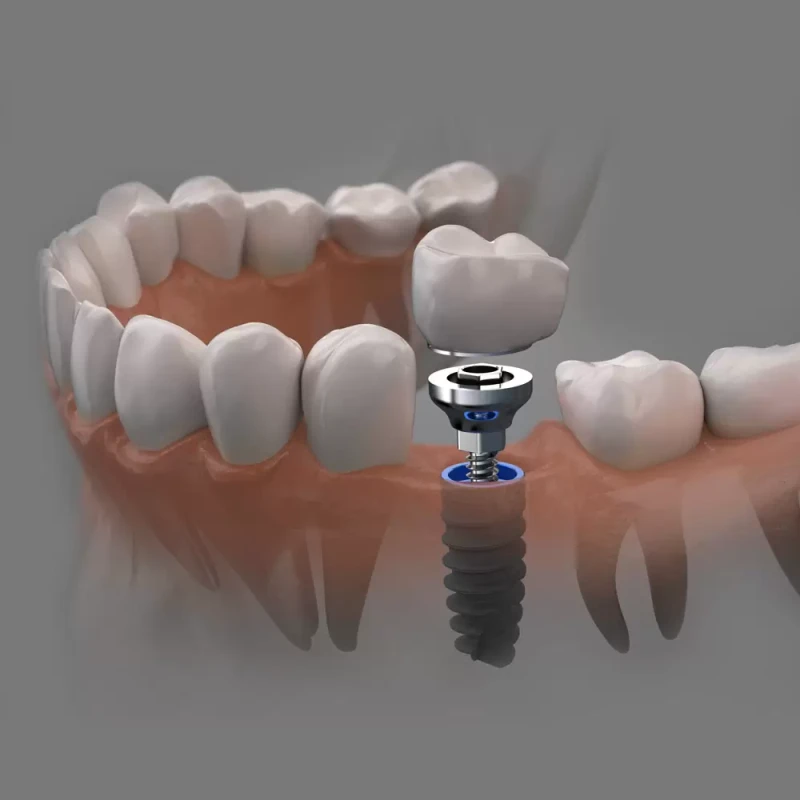
Within the field of restorative dentistry, tooth loss is not merely interpreted as the absence of a biological structure. Instead, it represents the disruption of a mechanical network. Dental research platforms such as SmileNote frequently highlight that missing teeth replacement must be understood through the lens of structural engineering as much as biological restoration.
Every tooth functions as a load-bearing unit within a complex system known as the dental arch. When a single component disappears, the distribution of forces throughout the system changes. The concept of missing teeth replacement therefore addresses not only aesthetic reconstruction but also the re-establishment of mechanical equilibrium. Examining the dental arch as a structural framework provides insight into why replacement procedures are frequently recommended in modern dentistry.
The Dental Arch as a Load Distribution System
Force Transmission Pathways
From a mechanical standpoint, the dental arch behaves similarly to a segmented structural bridge. Each tooth receives and transmits forces generated during chewing, speech, and jaw movement.
These forces travel through the enamel surface, into dentin, through the root structure, and ultimately into the surrounding alveolar bone. This process distributes mechanical loads across multiple teeth rather than concentrating pressure on a single location. When one tooth is removed from this network, load distribution shifts abruptly. Adjacent teeth may experience higher stress levels than originally designed for the system. For this reason, missing teeth replacement often becomes an engineering solution to restore the load-sharing mechanism of the dental arch.
Mechanical Consequences of an Unoccupied Dental Space
Structural Discontinuity
The absence of a tooth introduces a structural discontinuity within the arch. In engineering terms, the system transitions from a closed support structure to a partially unsupported framework.
Over time, neighboring teeth may drift toward the open space due to the absence of lateral support. Meanwhile, opposing teeth may extrude vertically because they no longer encounter resistance during biting. These mechanical movements gradually alter the geometry of the dental arch. As the system loses symmetry, the distribution of chewing forces becomes increasingly irregular. The goal of missing teeth replacement is to reintroduce a structural element that stabilizes the arch and restores the intended force pathways.
Engineering Principles Behind Missing Teeth Replacement
Modern dentistry approaches missing teeth replacement using design principles similar to those applied in structural engineering. A successful restoration must meet several functional requirements:
- Load Resistance: First, it must withstand repetitive loading cycles generated by daily chewing activity. Human teeth experience thousands of such cycles every day.
- Structural Integration: Second, the restoration must integrate with surrounding structures without introducing excessive stress to neighboring teeth or bone.
- Positional Stability: Third, the replacement structure must maintain positional stability over long periods of time.
Different dental restoration methods attempt to meet these requirements through distinct mechanical strategies.
Implant-Based Missing Teeth Replacement
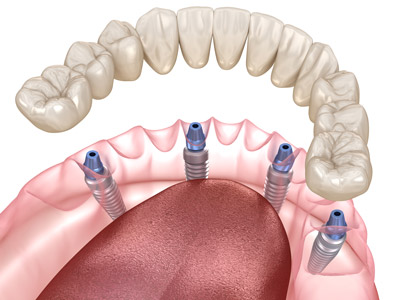
Dental implants represent one of the most structurally independent forms of missing teeth replacement. In this design, a titanium fixture is inserted into the jawbone to function as an artificial root.
Once integrated with the bone, the implant supports a crown that replicates the missing tooth's visible portion. From a mechanical standpoint, implants transfer occlusal forces directly into the bone rather than relying on adjacent teeth for support. This design allows implants to function as isolated load-bearing units within the dental arch. As a result, they often replicate the mechanical behavior of natural teeth more closely than other replacement options.
Bridge-Supported Replacement Systems
Dental bridges use a different engineering strategy. Instead of creating an independent support structure, bridges rely on adjacent teeth to anchor the prosthetic tooth.
The artificial tooth fills the empty space while crowns on neighboring teeth distribute the chewing forces. In mechanical terms, the system functions similarly to a suspended beam supported by two structural pillars. Although effective in many cases, this approach requires the supporting teeth to absorb additional mechanical stress. Careful design and material selection are therefore essential when planning missing teeth replacement using bridge systems.
Removable Prosthetic Architectures
Removable partial dentures represent another structural configuration. These appliances rely on a combination of gum support and mechanical clasps attached to remaining teeth.
Unlike fixed restorations, removable appliances distribute chewing forces across both soft tissue and hard dental structures. The mechanical design must therefore accommodate differences in compressibility between gum tissue and teeth. While removable prosthetics may not provide the same degree of structural stability as implants or bridges, they remain a practical solution in cases involving multiple missing teeth or limited bone support.
Materials Engineering in Restorative Dentistry
Material selection plays a critical role in restorative dentistry. Dental restorations must tolerate repeated loading while resisting wear, corrosion, and fracture.
Common materials used include titanium alloys, zirconia ceramics, and porcelain-fused metals. Each material offers different mechanical characteristics, such as strength, flexibility, and resistance to fatigue. For example, titanium is widely used in implant systems because of its favorable strength-to-weight ratio and compatibility with bone tissue. Selecting appropriate materials ensures that the restoration performs reliably under the demanding mechanical conditions present within the oral environment.
Conclusion: Long-Term Structural Stability
The ultimate goal is maintaining structural stability within the dental arch over extended periods of time. When the system is properly restored, chewing forces can once again travel along balanced pathways. This helps prevent excessive wear, abnormal tooth movement, and joint strain.
However, long-term outcomes vary depending on individual factors such as bone density, bite alignment, oral hygiene, and general health. Institutions such as the American Dental Association (ADA) and the National Health Service (NHS) emphasize that dental treatments must always be tailored to individual clinical conditions.
Viewed through the perspective of structural mechanics, tooth loss represents a disruption in the load-bearing network of the dental arch. Restorative dentistry addresses this disruption through carefully designed missing teeth replacement systems. Whether implemented through implants, bridges, or removable prosthetics, replacement strategies aim to restore functional equilibrium within the oral system.