Your Complete Guide to Safety and Comfort During a Dental X-ray
Introduction to the Patient Experience
Visiting the dentist can cause anxiety for many people, and the idea of radiation—no matter how small—often adds to that stress. Whether you are a new patient or someone returning after a long hiatus at SmileNote, understanding what to expect can significantly reduce your apprehension. The modern Dental X-ray is a cornerstone of your check-up, designed with patient safety and comfort as the top priorities. This guide will walk you through the preparation, the process, and the safety measures we take to ensure your appointment is smooth and worry-free.
Preparing for Your Appointment
There is very little you need to do to prepare for a Dental X-ray, but a few small steps can make the process faster.
Removing Interference
The technology used to capture these images is extremely sensitive to metal. Before the process begins, you may be asked to remove earrings, nose rings, necklaces, eyeglasses, and removable dental appliances (like partial dentures or retainers). Metal objects create "scatter" on the image—bright white streaks that block the view of your teeth. By removing these items beforehand, you prevent the need for retakes.
Additionally, if you have a strong gag reflex, let the dental assistant know immediately. They have tricks—like using salt on the tongue or specialized numbing rinses—that can make the sensor placement much more tolerable.
Pregnancy and Health Communication
Communication is vital for safety. While a Dental X-ray is extremely low dose, we always exercise caution with pregnant patients.
The "Need to Know" Basis
If you are pregnant or think you might be, inform the staff immediately. In many cases, elective X-rays (like routine check-ups) can be postponed until after the baby is born. However, if you have a dental emergency, such as a painful infection, an X-ray may be necessary to treat you. Untreated infection poses a greater risk to the baby than the X-ray itself. In these cases, we use double-lead aprons and precise collimation to ensure virtually zero radiation reaches the abdomen.
Also, inform your dentist if you have had recent X-rays at another office; we can often request those images to avoid duplicating them.
The Modern Process: Digital Sensors vs. Film
If it has been a while since your last visit, you might be surprised that we no longer use sharp, cardboard film packets.
Enhanced Comfort and Speed
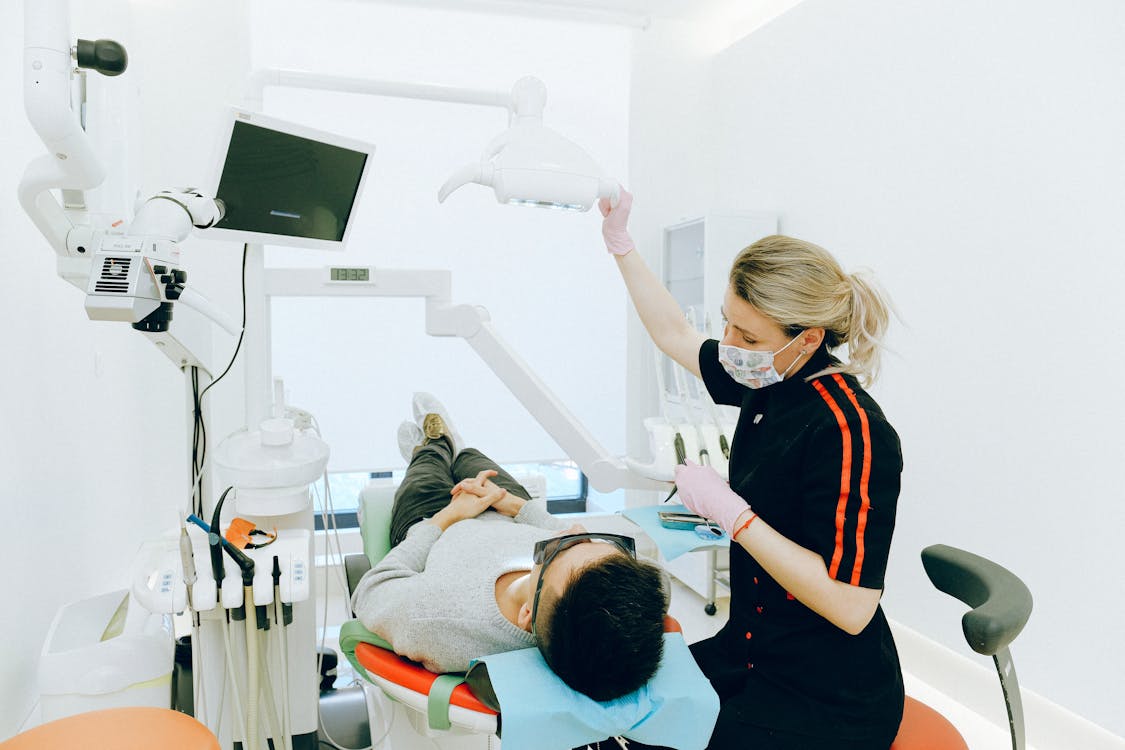
Modern offices use digital sensors for the dental X-ray. These are slightly bulkier than film but have rounded corners for comfort. The biggest advantage for you is speed. There is no waiting for film to develop in a darkroom. The image pops up on the screen instantly. This reduces the time you have to sit with your mouth open. Furthermore, digital sensors are much more sensitive to X-rays than film, which means we can reduce the radiation dose by 80-90% compared to the techniques used a few decades ago.
Understanding Radiation Safety
The most common question patients have is: "Is this safe?"
Putting Dosage in Perspective
To understand the safety of a Dental X-ray, we use the unit "microsievert" (µSv). We are all exposed to "background radiation" every day from the sun, the soil, and even the food we eat (like bananas).
- A set of 4 bitewing dental X-rays: ~5 µSv.
- A typical day of background radiation from living on Earth: ~10 µSv.
- A flight from New York to Los Angeles: ~40 µSv.
Essentially, getting a routine set of dental X-rays exposes you to less radiation than simply existing on the planet for a day. Despite this low risk, we still use lead aprons (often with thyroid collars) to cover your neck and chest. This is the "ALARA" principle—keeping exposure As Low As Reasonably Achievable—because we respect your long-term health.
Frequency: Why Do I Need Them Again?
Patients often ask why they need new images if nothing hurts. The frequency of a Dental X-ray depends on your specific risk profile, not a rigid calendar.
- High Risk: If you have a history of many cavities, dry mouth, or gum disease, we may need images every 6 to 12 months to catch problems while they are small.
- Low Risk: If you have never had a cavity and have excellent hygiene, you may only need bite-wing X-rays every 18 to 24 months.
- Panoramic: This full-head scan is usually updated every 3 to 5 years to check bone levels and wisdom teeth.
The process of getting X-rays at the dentist is fast, comfortable, and incredibly safe using modern technology. It is the tool that allows your dental team to be proactive rather than reactive. By understanding the safety protocols and the reasons behind the procedure, you can approach your next appointment with confidence, knowing that these images are the key to a lifetime of healthy smiles.