Mechanical Stress Distribution in Chipped Porcelain Crowns
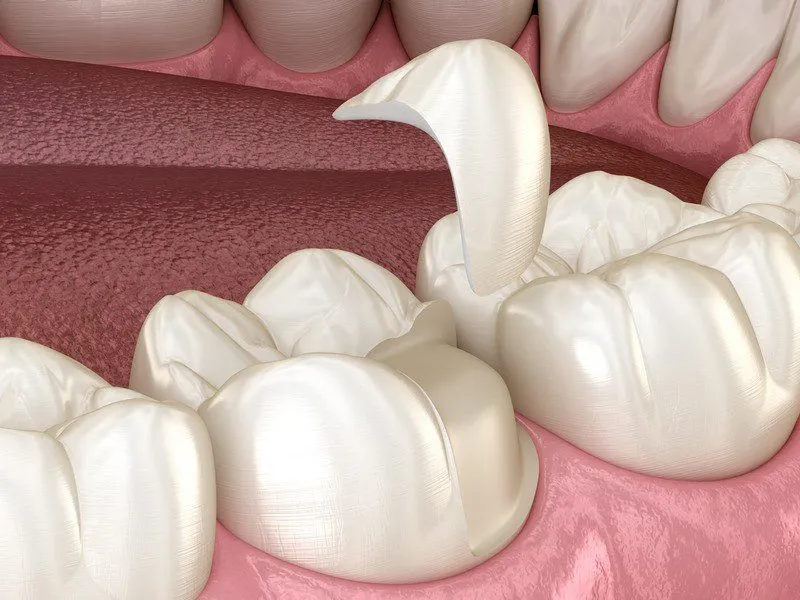
Within restorative dentistry, the phenomenon of chipped porcelain crowns is often analyzed through the lens of material science and structural engineering. Rather than focusing primarily on patient perception or clinical symptoms, a technical perspective examines how mechanical forces interact with ceramic structures.
On SmileNote, discussions occasionally explore the engineering principles underlying dental restorations. Porcelain crowns function as small structural systems that must withstand repeated loading cycles inside the oral environment. Their performance depends not only on aesthetic properties but also on mechanical reliability.
Understanding why porcelain crowns chip requires examining the stresses generated during chewing, the material properties of ceramics, and the interface between crown and tooth structure.
Ceramic Materials and Brittleness Characteristics
Crack Propagation in Brittle Materials
Porcelain belongs to the category of brittle materials. Unlike metals, which may deform slightly under stress, ceramics tend to fracture when internal stress exceeds their tensile strength.
Dental porcelains are engineered to improve durability by incorporating crystalline reinforcements and controlled firing processes. Even with these improvements, their mechanical behavior remains fundamentally brittle.
In structural analysis, brittle materials often fail through crack propagation. A microscopic flaw may exist inside the ceramic surface long before it becomes visible. Under repeated loading cycles, this flaw can gradually extend until a small fragment separates. This mechanism explains why chipping sometimes occurs unexpectedly after long periods of normal use.
Load Distribution During Mastication
Chewing forces vary widely among individuals. Studies frequently estimate that posterior teeth may experience forces exceeding several hundred newtons during heavy biting. When a crown replaces natural enamel, these forces must travel through the ceramic material before reaching the supporting tooth and periodontal structures.
- Ideally, crown design distributes these loads evenly across the surface.
- However, localized contact points may concentrate stress into small areas.
- These concentrated stresses can accelerate crack propagation in porcelain surfaces.
Once the crack reaches the outer layer of the ceramic, chipped porcelain crowns may become clinically visible.
Influence of Crown Geometry
Structural Stability and Design
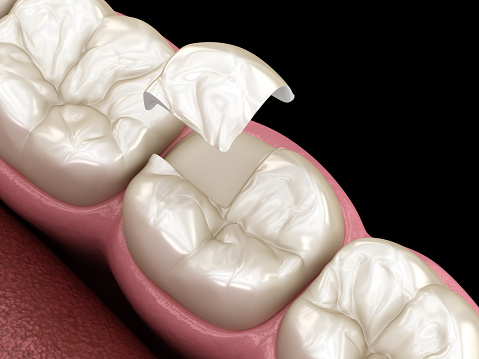
Engineering analysis often highlights the role of geometry in structural stability. In dental crowns, geometry includes factors such as occlusal thickness, cusp design, and marginal contour. Variations in thickness can create stress concentration zones within the ceramic.
For example, areas with minimal porcelain thickness may experience greater tensile stress during biting. Conversely, overly thick sections may accumulate residual stresses from the manufacturing process. Proper crown design therefore attempts to balance material thickness and shape in order to distribute mechanical forces efficiently. Inconsistent geometry can contribute significantly to structural failure.
Interfacial Mechanics Between Crown and Tooth
The structural integrity of a crown depends not only on the ceramic itself but also on the interface between the crown and the underlying tooth.
Dental cements function as bonding layers that stabilize the crown and help transfer forces into the tooth structure. If the interface becomes uneven or compromised, stress distribution may change. From a mechanical standpoint, the crown-tooth interface behaves similarly to a layered composite system. Stress must travel through multiple materials with different elastic properties. Irregularities within this system may increase the likelihood of localized fracture within the porcelain layer.
Fatigue Behavior of Dental Ceramics
Repeated mechanical loading is a critical factor in the long-term durability of dental restorations. Unlike a single catastrophic impact, fatigue occurs when materials experience thousands or millions of small loading cycles. Each chewing motion contributes a tiny amount of stress.
Over time, these repeated stresses can enlarge microscopic cracks inside the ceramic structure. Fatigue-induced crack growth is one of the primary mechanisms associated with structural failures in long-term clinical studies. Environmental factors such as temperature changes and moisture may also influence ceramic fatigue behavior.
Diagnostic Evaluation Through Structural Observation
When dentists encounter damaged crowns, the fracture pattern often reveals useful mechanical information. Surface chips may indicate localized contact overload, while deeper fractures could suggest internal structural weaknesses.
Magnification tools and digital imaging technologies allow clinicians to analyze fracture patterns with greater precision. By examining the shape and direction of cracks, dentists may infer how mechanical forces acted upon the crown. Such observations help guide decisions regarding repair, adjustment, or replacement.
Engineering Improvements in Modern Crown Materials
Advances in dental materials science continue to address the challenges associated with ceramic fractures. Newer ceramic formulations incorporate stronger crystalline structures designed to resist crack propagation. Computer-aided design and manufacturing systems also allow crowns to be produced with more consistent geometry.
These technological developments aim to reduce the frequency of fractures while maintaining the aesthetic advantages of ceramic restorations. Nevertheless, no restorative material is entirely immune to mechanical fatigue.
Conclusion
From a technical standpoint, structural damage to dental restorations represents a mechanical event influenced by loading, material properties, and geometric design. Ceramic restorations operate within a demanding biomechanical environment where repetitive forces interact with brittle materials.
Understanding the engineering principles behind crown performance provides valuable insight into why chipping occurs and how dental professionals can mitigate these risks through improved design and material selection. Ongoing developments in dental materials science continue to refine the balance between aesthetics and mechanical durability for chipped porcelain crowns.